
Muskegon County Court Docket Searches
Muskegon County's Online Case Search page is where a docket search begins. It points you to MiCOURT. That covers the 14th Circuit Court, the 60th District Court, or the 61st Probate Court. Pick the right court before you search. One lookup will not cover all three. A felony can open in district court and then move to circuit court. Misdemeanors, traffic matters, small claims, and civil infractions stay with the countywide district court. Estates and guardianships fall under the probate scope. Have a legal name or case number ready. What you get is a case history, a dated chronology rather than a folder of document images. Results can show the case number, court, status, hearings, and dated entries. For a missing document, a certification, an older file, or a pressing court date, call the clerk next.
- Open the county routing page and select C14, D60, or P61 based on the court and case type.
- Accept MiCOURT's public-use terms, then search by a full party name or the case number from a notice.
- Use case year, category, status, or filing-date filters to narrow a common name.
- Read the most recent case-history entry and compare any listed setting with the written court notice.
- Call or visit the clerk who holds the file when the needed record is not displayed or a date must be confirmed.
Note: A hit in one Muskegon County court does not rule out a second record elsewhere after a transfer, bindover, or appeal.
Muskegon County MiCOURT Docket Scopes
MiCOURT is Michigan's statewide case-information layer. The county page simply routes you to it. The three Muskegon County scopes each cover different work. C14 MiCOURT covers the 14th Circuit Court. Its docket holds felonies after bindover, major civil matters, and circuit family cases, subject to access limits. D60 MiCOURT covers the 60th District Court. That means traffic, civil infractions, misdemeanors, preliminary felony work, small claims, and district civil cases. P61 MiCOURT is the probate view. The county Hall of Justice facility listing puts the whole court system under one roof. A shared building does not make the clerks interchangeable, though. The court code on your notice, the case type, and where the file sits now decide which scope and clerk are right.
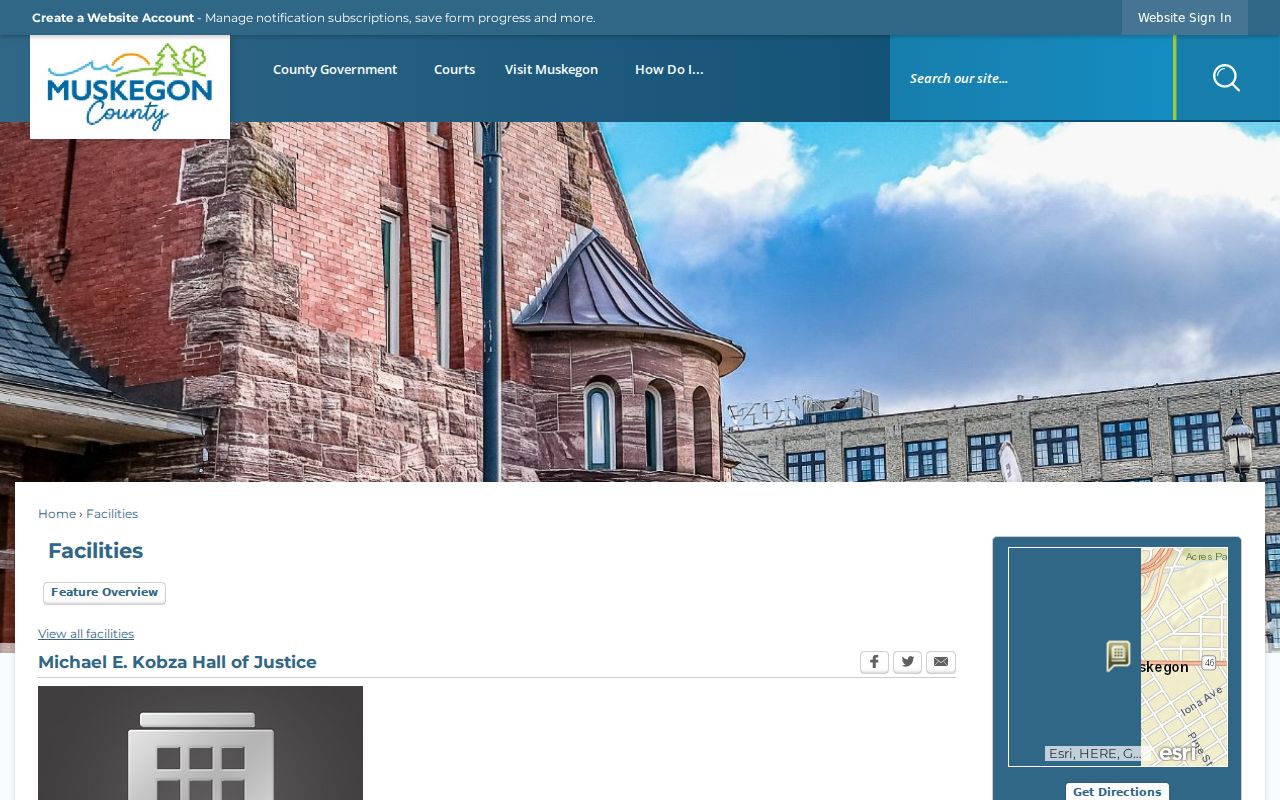
That layout is a useful reminder. A Muskegon County case history may be online while the paper file or certified court record you need sits with one specific court office.
Court Dockets: What They Show
Michigan calls the chronological docket a case history. It is also called a register of actions. Under MCR 8.119, the clerk keeps that history and the separate case file. The history tells you what was filed, issued, returned, or scheduled. It lets you follow the court's work. You will not mistake a short entry for the full legal document.
| Case number | The identifier assigned to the case, often with a year, sequence, and type suffix. |
|---|---|
| Parties and attorneys | The caption, participant roles, and public attorney information where access permits. |
| Filed or issued item | A dated notation for a complaint, motion, notice, order, return, judgment, or other event. |
| Setting | The date, time, judge, room, and label for a listed hearing or court event. |
| Status and disposition | Public case status and any recorded outcome, which should be read with later entries. |
| Document access | A public history may not include every image. The clerk controls copies of the court file. |
A filing entry is not a ruling. A line saying judgment entered is not a certified judgment. When you need the exact order or a certified record, ask the clerk for that item.
Muskegon County Case History Terms
The local public calendar pairs short labels with the case history. Those labels hint at the next event. They do not settle the outcome. A setting called Dispo may just be a hearing aimed at resolution. That is not proof the case ended. PT marks a pretrial stage, and Adj PT means the pretrial was adjourned or continued. For anything urgent, the court notice and a direct confirmation control.
- Case history
- The chronological register of filings, court-issued items, returns, and major case events.
- Prelim
- A preliminary examination in district court that tests probable cause in a felony case.
- PT
- A pretrial conference or preparation setting before trial or another resolution.
- Dispo
- A disposition setting, which may involve a plea, resolution, or final action.
- Public status
- The access classification shown by the system, which can be public, suppressed, or otherwise restricted.
Call a Muskegon County court desk with the exact court, case number, and latest date. Staff can then pull the same case history without guessing from a short calendar label.
Muskegon County Courts and Their Dockets
Muskegon County runs a three-court public search structure. The 14th Circuit Court is the general-jurisdiction trial court. The 60th District Court is the county's only district court. Probate jurisdiction sits with the 61st Probate Court. The city named on a citation adds nothing; ordinary traffic, civil-infraction, and lower-level criminal matters still land on a county trial docket.
| Court | Docket covers | Where to search or request |
|---|---|---|
| 14th Circuit Court | Felonies after bindover, major civil, family, business-court, and district appeals. | C14 MiCOURT and Circuit Court Records. |
| 60th District Court | Misdemeanors, felony preliminaries, traffic, civil infractions, civil matters up to $25,000, small claims, and evictions. | D60 MiCOURT and the District Court clerk. |
| 61st Probate Court | Estates, trusts, guardianships, conservatorships, and related probate matters. | P61 MiCOURT and the Probate Court register. |
| City record office | City ordinances, parking administration, police reports, and other city-held records. | The city clerk or issuing agency, not a substitute for a filed court record. |
The county courts page lists court-specific contacts. Use them when the case number alone does not make the court obvious.
Muskegon County Felony Docket Transfers
Every Muskegon County criminal case starts in D60. Misdemeanors stay there through sentencing. A felony begins there too. It covers arraignment, bond, and preliminary-examination work, then moves to the 14th Circuit Court after a bindover. That is why one matter can leave an early D60 history. It may also leave a later C14 history. Search D60 first. Check C14 once a bindover, transfer, or circuit case number appears. County project facts for the Hall of Justice describe courtrooms and offices shifted during renovation phases. Confirm the current counter or floor with the court rather than trusting an older notice.
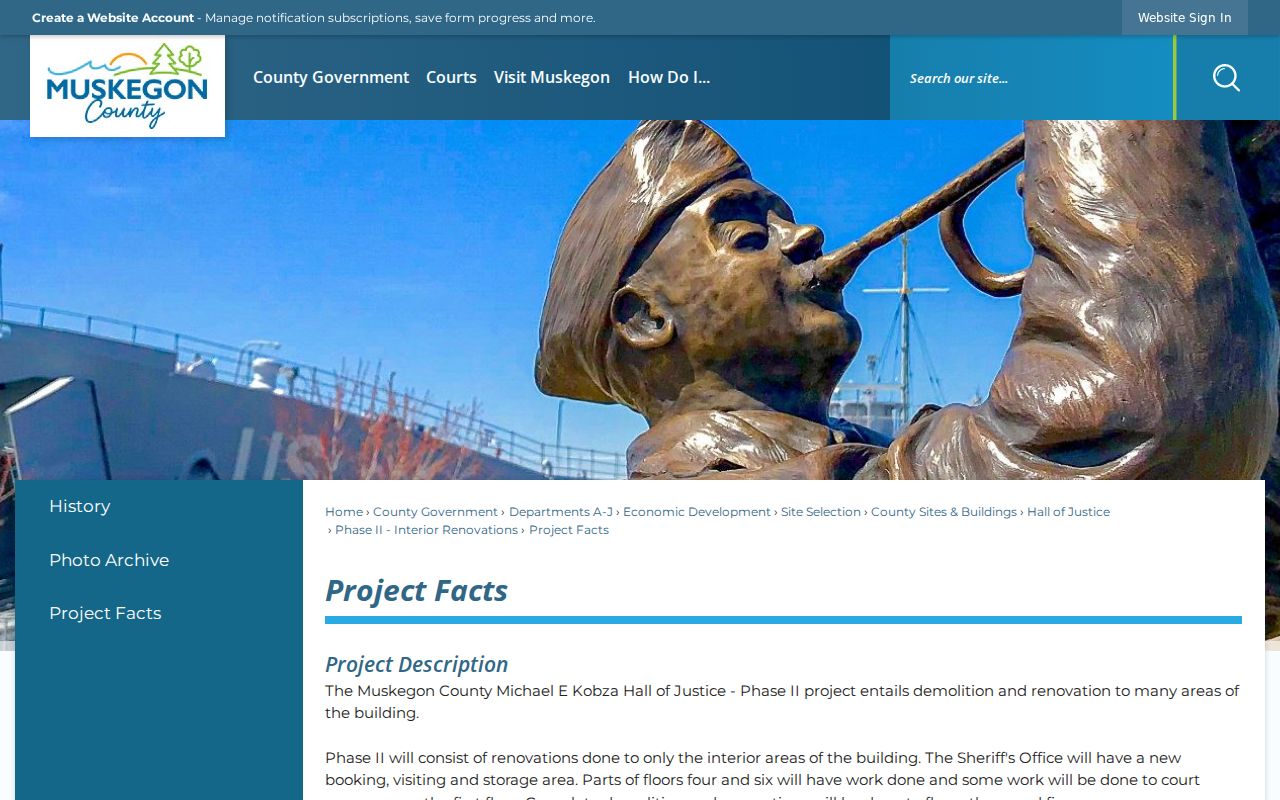
The building work changed none of that. D60 still holds the early criminal court history, and Circuit Court Records holds the circuit criminal file after a qualifying transfer.
Court Dates and Settings in Muskegon County
A Muskegon County hearing date can surface in several places. You might see it in the MiCOURT case history. It may also surface on a District Court judge display, on a circuit schedule, or on a written notice mailed to you. The paper wins. Whatever the subpoena, summons, notice to appear, or court order says controls the person who received it. Online schedules are public-service tools, the county cautions. They can change without notice. They never serve as the official calendar of court activity. For a D60 case, the Online Court Dockets page connects you to the public displays. Each District Court judge has one. Match the date, time, setting label, and case number against the newest case-history entry before relying on either one. Circuit and probate settings call for their matching MiCOURT scope. If the sources conflict, confirm with the clerk or coordinator. Note: A reset moves a hearing date. It does not erase the case. Nor does it establish that a charge or claim was dismissed.
Muskegon County Calendar Labels
Public D60 displays often list a judge or room. They also show a time, a case number, and a setting label. Common labels include Prelim/Review, PV/Review, PT, Dispo, Plea, and Adj PT/Plea. A nonpublic entry may still show a date and room while holding back the details. Treat a label as a clue to the type of setting. It is never a final court finding. For comparison with your notice, one entry matters most. Use the latest entry that was not cancelled.
- Review
- A later check-in or compliance hearing. The label alone does not identify a result.
- PV
- A probation-violation setting, often paired with another hearing label.
- Adj PT
- An adjourned pretrial. It signals a moved event rather than a disposition.
- Plea
- A hearing where a plea may be entered or considered under court procedure.
Planning to appear in person? The county's Hall of Justice security notice explains why you should build in extra time for screening and follow the courtroom rules on devices.
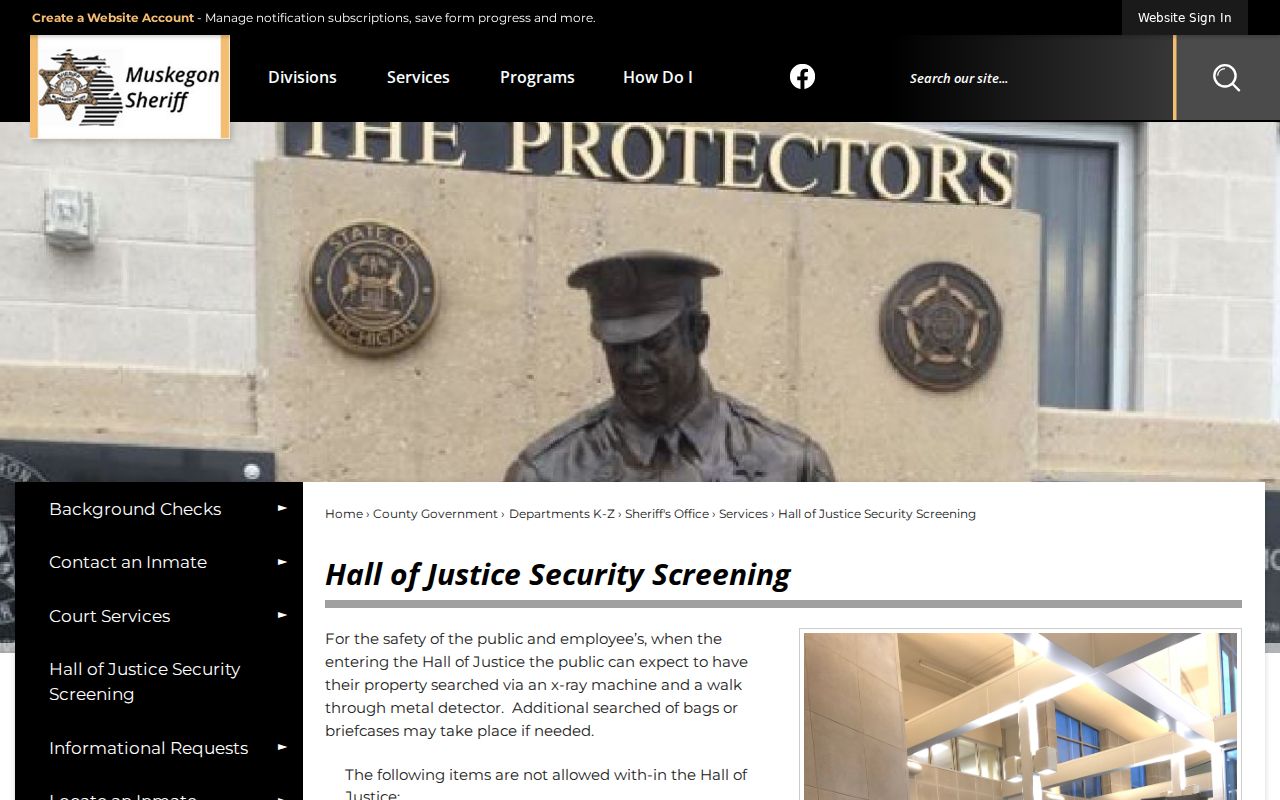
A docket entry points you to a hearing. Courthouse access rules govern anyone who must attend that Muskegon County setting in person.
Docket Access Under Michigan Law
Michigan court rule MCR 8.119 opens public case records to inspection and copying unless a statute, court rule, or qualifying order restricts access. Looking at a case history costs nothing. The court may still charge for reproduction or certification. FOIA works differently here. Muskegon County's own FOIA page states that court records are not county FOIA records, so a request for a filed court document goes to the clerk that holds it.
Key rules for a Muskegon County court docket:
MCR 8.119 permits public access to public case records and governs case histories, copying, sealing, and court calendars.
MCR 1.109 protects personal identifiers such as full birth dates, Social Security numbers, license numbers, and financial-account data.
MCL 712A.28 limits general public access to juvenile records, subject to its statutory exceptions.
Muskegon County's FOIA page distinguishes county administrative records from court records that must be requested from the proper court.
Public access does not guarantee that every record sits behind a name search. Protected information, juvenile material, sealed records, and excluded categories each require the access process that fits that record.
Muskegon County Docket Restrictions
An empty MiCOURT result proves nothing about whether a record exists. Check the court scope first. Check spelling and the case year too. Then ask about the record itself. It might be juvenile, sealed, suppressed, or otherwise nonpublic. It could also be not yet indexed, or an older file stored off site. Some courts apply a seven-year criminal-sentence filter. Michigan's public search notice says so. It directs searchers to the court itself for older conviction information. The public case-history view can hide protected identifiers even when the case itself is visible. It can likewise display a nonpublic calendar entry stripped of its underlying detail. Someone trying to protect their own listed information may use the court's redaction process. A general requester, though, cannot use ordinary search tools to get around an access restriction.
How the Clerk Keeps Docket Records
The Muskegon County Clerk serves as clerk of the 14th Circuit Court. Circuit Court Records maintains the circuit civil, criminal, domestic, custody, business-court, and related files. The 60th District Court clerk holds the countywide district case history and files. The Probate Court register keeps its own probate records. Before requesting any copy, start with the court named in the case history. Circuit Court Records takes record-search questions along with requests for plain or certified documents. Callers should have a few things ready. Bring a full name and telephone number. Add full case names and the case number if known. Circuit files on site have limits. Family records run from 2009, criminal records from 2013, and civil records from 2014. Anything older needs at least five days for delivery.
Muskegon County Clerk, Circuit Court Records
990 Terrace Street, sixth floor, Suite 600
Muskegon, MI 49442
231-724-6251
Muskegon County Court Record Copies
Three things get confused here. A free case history is not a filed document. And a filed document is not a certified copy. For circuit files, the county posts a plain-copy charge of $1 per page. A $10 certification fee applies on top of the copy charge. Give the clerk the court, case number, caption, document name, approximate filing date, and whether the copy must be plain or certified. One firm limit applies: the clerk cannot certify a copy you bring in from elsewhere. The county file-request instructions walk through the off-site process. Current files may sit at the counter. Older circuit criminal, civil, and family files need time to be retrieved. Mail requests go to Circuit Court Records at Suite 600. Confirm district and probate copy totals with their own clerks, since the published fee labels vary by record type.
City-by-City Court Dockets in Muskegon County
Muskegon County has five most-populous incorporated cities. The count comes from 2020 Census figures. A city police department, clerk, parking office, or ordinance process may hold a city-origin record. Ordinary filed matters run through one court. They go to the countywide 60th District Court. That means filed traffic, civil-infraction, misdemeanor, and lower criminal court matters. So a city name on a ticket is not a separate county trial-court search scope.
Muskegon Court Records
38,318 in the 2020 Census. City records may begin with the Records Bureau; filed court cases route to D60.
Norton Shores Court Records
25,030 in the 2020 Census. The City Clerk holds city records, while D60 holds filed court matters.
Muskegon Heights Court Records
9,917 in the 2020 Census. The city handbook routes ordinary court matters to the county court.
Roosevelt Park Court Records
4,172 in the 2020 Census. City parking administration and a filed D60 case can be separate records.
North Muskegon Court Records
4,093 in the 2020 Census. City Hall handles city records; filed cases use the county court path.
The Census incorporated-place table supplies the ranking and its vintage. City-specific record doors help when you need an ordinance, police report, or parking record rather than a court case history.
Muskegon County Court Filing Snapshot
Filing numbers explain why picking the right court matters so much here. The state judicial-resources report counts 1,064 circuit criminal filings and 483 circuit civil filings. It adds 3,134 circuit family filings, 1,603 probate filings, and 9,124 district traffic infractions in 2024. Those are filings, not people or verdicts. A docket search in Muskegon County needs two things. Get the court type first, then the party name.
Michigan's judicial-resources report is where the system-wide totals come from. For district-level detail, the 60th District Court annual report adds local context. The county's Hall of Justice photo archive shows the shared courthouse tied to those filings.
Those workload numbers all come from one shared courthouse. It is the same building where Muskegon County keeps several court record systems in daily use.
Muskegon County Federal Docket Route
Federal cases never show up in C14, D60, or P61 MiCOURT. They live on a different track entirely. Muskegon County sits in the Southern Division at Grand Rapids of the U.S. District Court for the Western District of Michigan. That court files through CM/ECF and opens records to the public through PACER. Bankruptcy goes through the Western District bankruptcy system instead. Federal files carry their own case numbers. Their access rules and fees do not match a Michigan case history. The Western District of Michigan court site posts the district's federal court information. The bankruptcy court location page marks out the regional bankruptcy route. So a state docket search will not return a federal civil, criminal, or bankruptcy case.
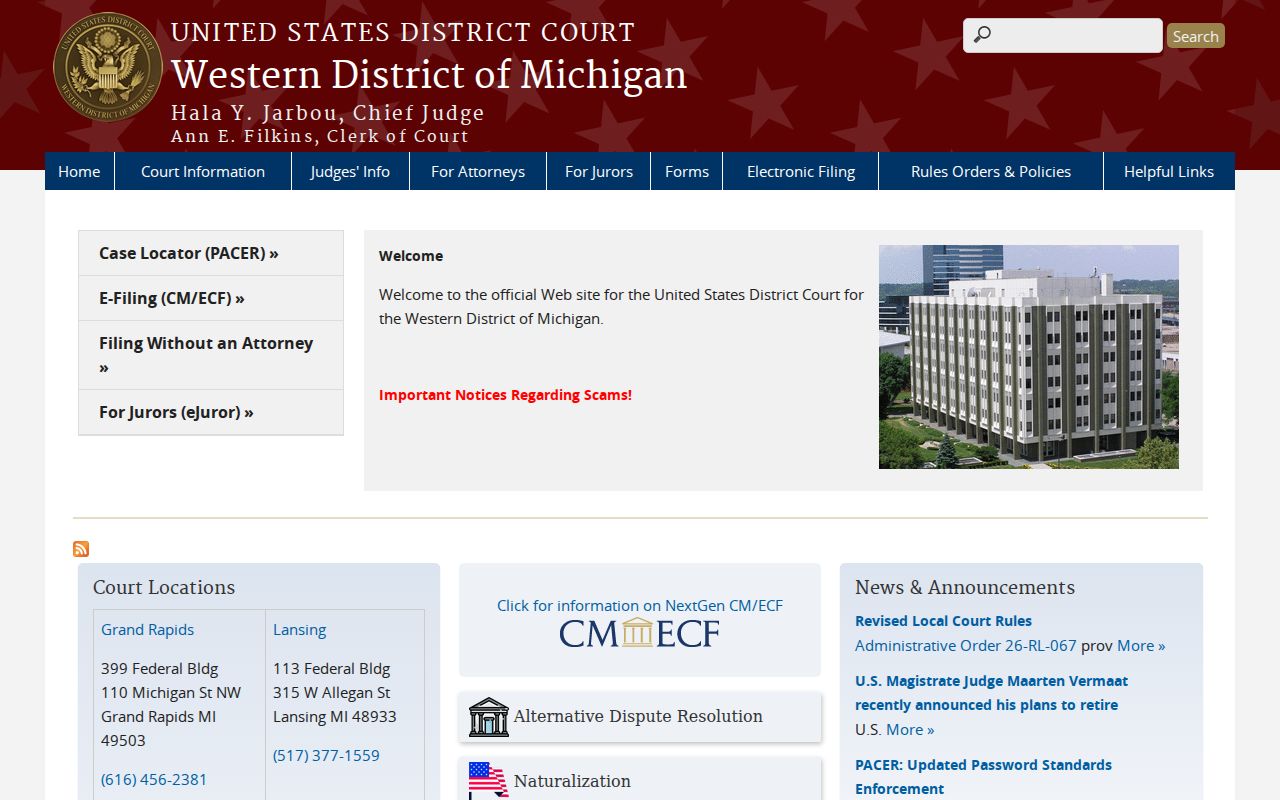
The federal route sits apart from any Muskegon County court docket search, even for events that happened in the county. The bankruptcy court location information runs through a different clerk too. Don't confuse it with a county probate case.
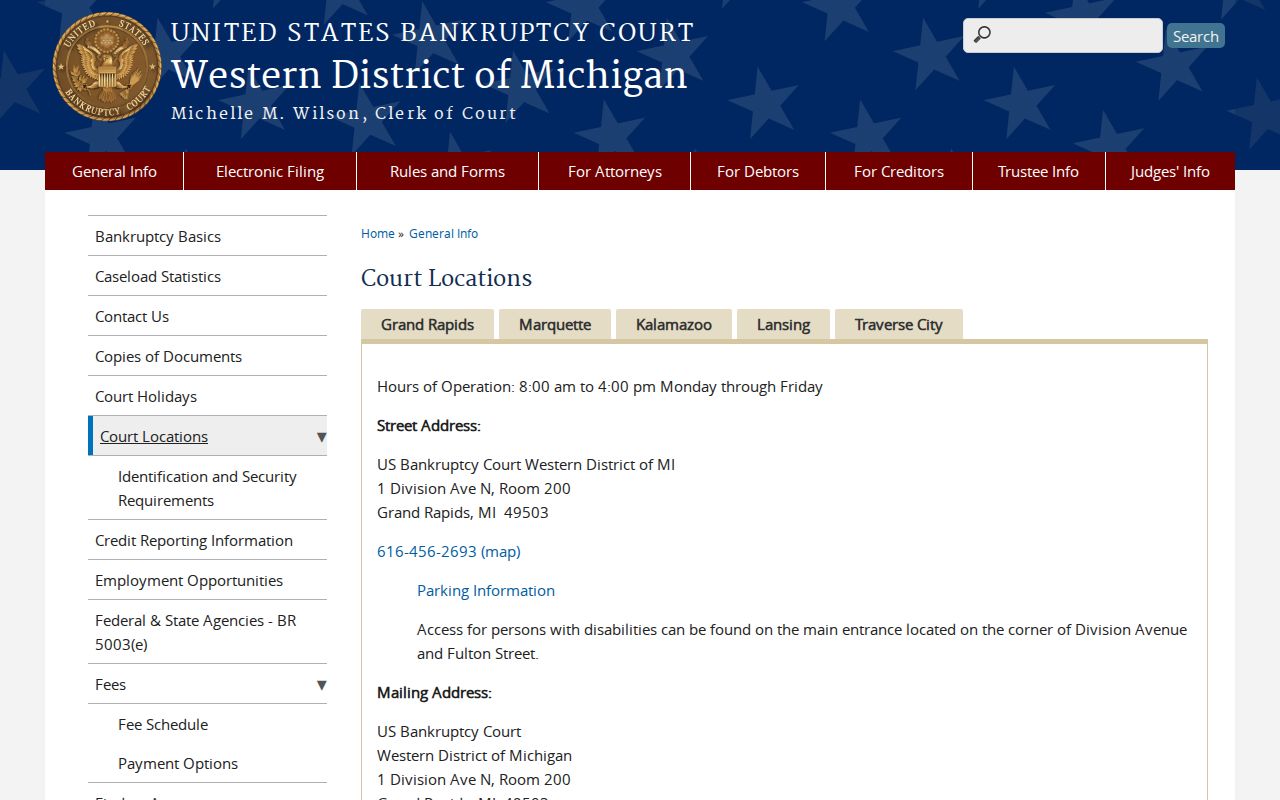
That wall matters. A dead end in a Muskegon County docket search says nothing about a federal file.
Map and Directions to the Michael E. Kobza Hall of Justice
The 14th Circuit Court's civil, criminal, and family files are kept by the County Clerk's Circuit Court Records office on the sixth floor, Suite 600, of the Michael E. Kobza Hall of Justice in downtown Muskegon. The same six-floor building also holds the 60th District Court on the first and second floors and the Probate Court on the fifth floor, so a visitor should confirm the floor and suite before making the trip.
Muskegon County Clerk, Circuit Court Records
990 Terrace Street, sixth floor, Suite 600
Muskegon, MI 49442
231-724-6251
Monday through Friday, 8:00 a.m. to 4:30 p.m.
The Hall of Justice screens visitors with an X-ray machine and walk-through metal detector; firearms, bladed weapons, chemical agents, and similar items are barred and the sheriff does not offer storage for them. Cell phones and recording devices are also barred from courtrooms under Michigan court rules. Anyone needing an ADA accommodation or a language interpreter should contact the court in advance of the visit.