
Muskegon County Civil Docket Searches
The county's Online Case Search sends the public to MiCOURT, which covers three scopes. C14 is circuit. D60 is district. P61 covers probate. Match the court to the case first, because a search in the wrong scope returns nothing useful. A case number is the fastest route when you have one. Without it, run a party or business name and then trim the results with the year, status, category, judge, or filing-date filters that MiCOURT provides.
Know what each system is for. MiCOURT shows public case information but not every filed image, and MiFILE through TrueFiling exists for electronic filing by permitted filers, not for public case lookup. Need a signed court document? Ask the clerk for a plain or certified copy rather than relying on the screen.
| Field | Type | Required | Notes |
|---|---|---|---|
| Last name / business name | Text | Principal name search | Search by a participant or business name. |
| First name / middle name | Text | Optional | Narrows participant results. |
| Case number | Text | Principal case search | Scope to C14 or D60 and use the full number when known. |
| Case year | Four-digit filter | Optional | Limits the list to the chosen year. |
| Civil category / subtype | Dropdown/filter | Optional | MiCOURT category is civil; subcategory varies by court. |
| Status | Dropdown/filter | Optional | Published values include open, closed, disposed, mediation, and garnishment. |
| File-date range | Date pair | Optional | From and To dates use YYYY-MM-DD in the API documentation. |
| Judge / public status | Filter | Optional | Use these filters to narrow a result list when exposed. |
| Search / Show / Clear | Buttons | Action | Query and filter controls documented in official MiCOURT materials. |
- Choose D60 or C14 from the county routing page after identifying the case type and amount range.
- Search by full case number or by the party or business name, adding a year or other filter when results are broad.
- Open the matching public case history and confirm the caption, court, and filing date before reading entries.
- Read the newest setting, filings, motions, orders, and outcome entries in date order.
- Contact the correct clerk for a signed judgment, a certified copy, or a document that is not available as a public image.
The MiFILE service distinguishes electronic filing from ordinary public case lookup.
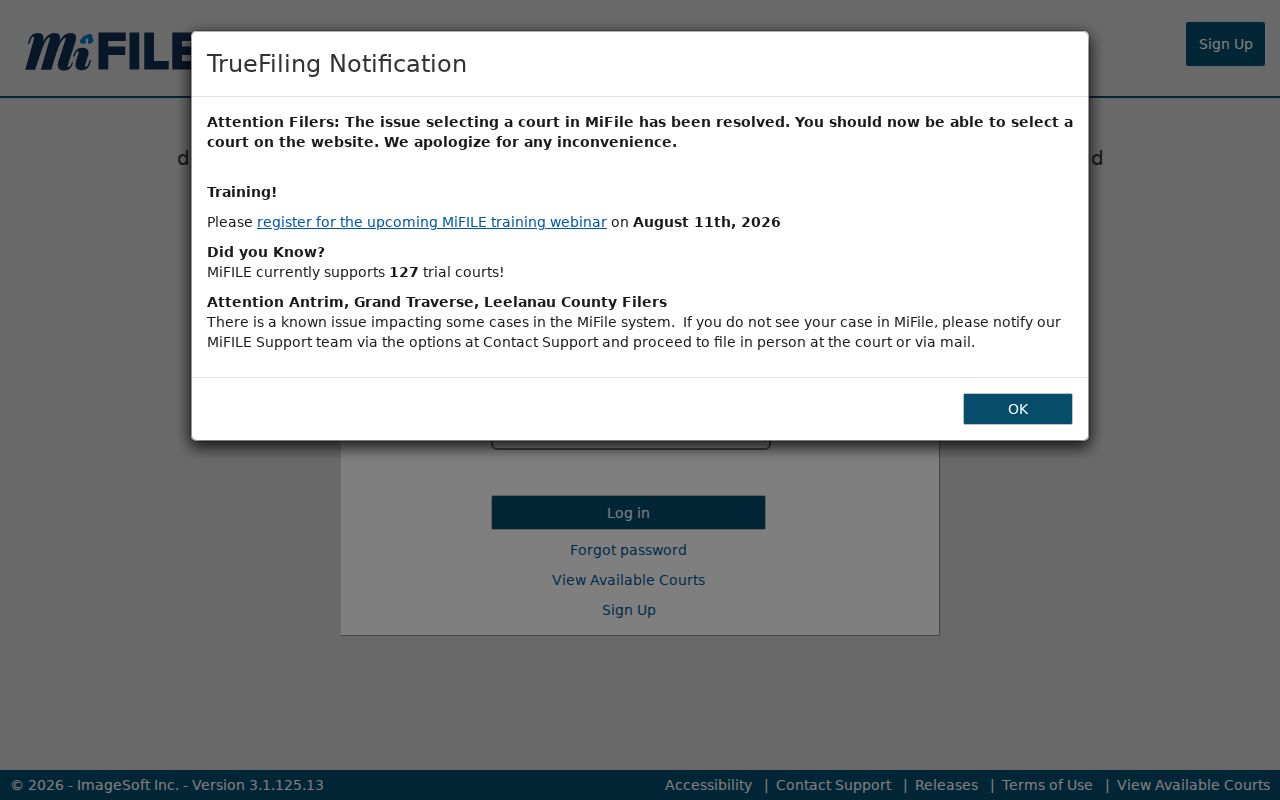
Public searchers should treat MiCOURT as the lookup tool and reserve MiFILE for filing.
Muskegon Civil Docket Searches: D60/C14
Your biggest search decision is D60 versus C14. The 60th District Court has exclusive jurisdiction over civil actions not exceeding $25,000, plus small claims, landlord-tenant proceedings, land-contract forfeitures, and civil infractions. The 14th Circuit Court takes civil matters at or above that threshold and anything assigned to circuit jurisdiction, including business-court matters. An ordinary civil action will not appear in a probate search.
Circuit civil files sit with Circuit Court Records. That office keeps them at 990 Terrace Street, Suite 600, and answers the phone at 231-724-6251. D60 civil questions go to Suite 100 at 231-724-6329. Either office can confirm it holds the file. For electronically maintained public records, ask the clerk about access equipment. The online view may not be complete.
The county's Circuit Court judges page shows which judges hear circuit-level civil matters.
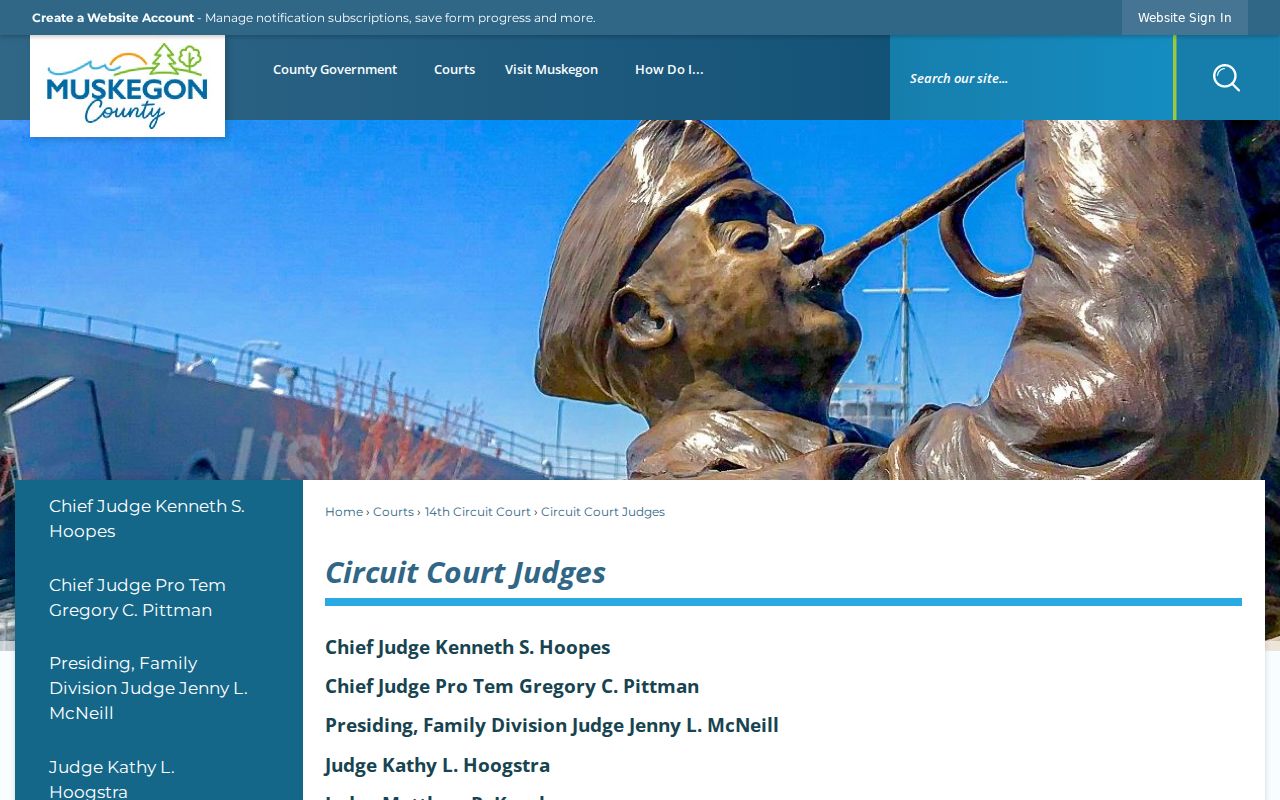
Checking the court assignment makes any civil docket search more reliable. That matters most when a case might sit at a different level of the county court system than expected.
Civil Dockets: What They Show
A civil case history is a dated log of events. It tracks filings, items the court issues, returns, and hearing settings in order. Expect to see the caption and the parties. Attorneys, the claim type, and the current public status appear too. The register may list a complaint or petition, a summons or citation, proof of service, an answer, a counterclaim, discovery items, motions, notices, orders, judgments, and post-judgment filings. Remember what an entry is. It proves an event was recorded. It never replaces the signed document itself.
| Header | C14 or D60 court, case number, filing date, assigned judge, case type, caption, status, and public status. |
|---|---|
| Parties | Plaintiff or petitioner, defendant or respondent, intervenors, attorneys, and service status. |
| Claim | Cause of action, amount category, small-claims or landlord-tenant designation, and related-case reference when available. |
| Register | Complaint or petition, summons or citation, proof of service, answer, counterclaim, discovery, motions, notices, orders, hearings, judgment, and post-judgment filings. |
| Settings | Date, time, room, judge, and setting type. |
| Financial | Filing fee, judgment amount, costs, garnishment, balance, or payment information where exposed. |
| Outcome | Judgment, default, dismissal, nonsuit, settlement or agreed order, or appeal. |
| Documents and redactions | Public image links only where the court provides them; protected identifiers and restricted records withheld. |
Case numbers carry meaning. A circuit case can pair a year, a sequential number, and a type suffix, as in 2025-005353-CZ. Check the court code and caption before treating a similar number as your record.
Muskegon Civil Docket Court Line
That $25,000 civil line is a jurisdiction rule. It is not a fee. D60 covers civil actions up to that amount. C14 covers everything at or above it and cases otherwise assigned to circuit court. Small claims carry their own $7,000 ceiling. Land-contract forfeitures and landlord-tenant possession proceedings also sit within the District Court's published civil jurisdiction.
The county's Civil and Small Claims page posts the filing fees. Those amounts pay for bringing a case. They do not pay for reading a public case history. They also help you recognize the case categories that show up on a D60 docket.
| D60 filing category | Published filing fee |
|---|---|
| Small claim up to $600 | $30 |
| Small claim over $600 to $1,750 | $50 |
| Small claim over $1,750 to $7,000 | $70 |
| General civil up to $600 | $35 |
| General civil over $600 to $1,750 | $55 |
| General civil over $1,750 to $10,000 | $75 |
| General civil over $10,000 to $25,000 | $160 |
| Landlord-tenant possession | $55, plus additional amounts for a money judgment request |
Muskegon County bases its published D60 civil and small-claims fee tiers on the county's own fee schedule.
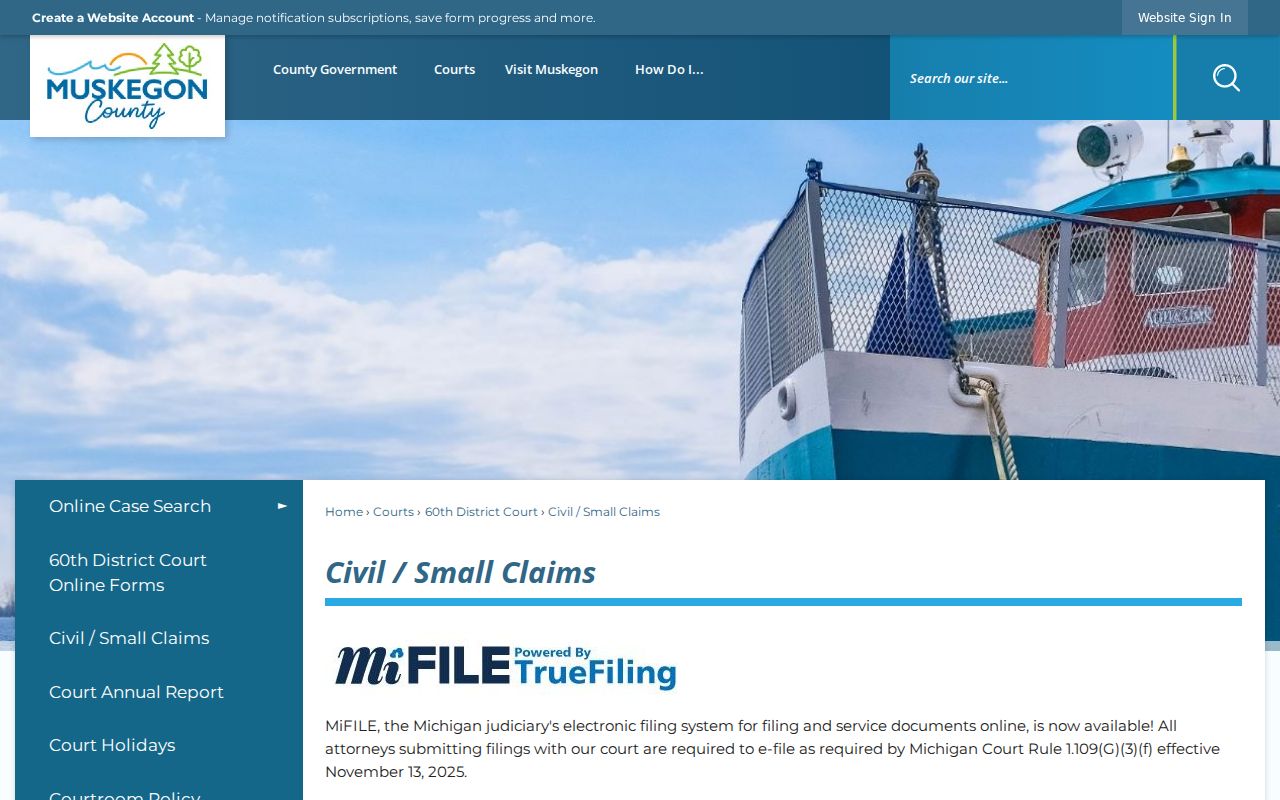
Fee categories can help identify a filing type. They do not change the public-access rules for the civil case history.
What Cases Fill the Civil Docket
The civil docket is not one uniform list. D60's published civil work includes general civil actions within its limit, small claims, landlord-tenant proceedings, and land-contract forfeitures. C14 carries the higher-value civil matters and business-court cases. Probate keeps a separate docket for estates, trusts, guardianships, and conservatorships. Family cases run through the circuit Family Division. There, public access to sensitive documents can be limited.
- General D60 civil actions not exceeding the district limit.
- Small claims up to the county's $7,000 ceiling.
- Landlord-tenant possession and land-contract forfeiture matters in D60.
- C14 civil matters at or above the district threshold, including business-court matters.
- Separate P61 probate records for estates, trusts, guardianships, and conservatorships.
The county's Filling Out Forms and Filing Documents page points filers to local court filing information.
Knowing the initial filing type helps you pick the right court scope. Make that choice before hunting for the later civil case history.
Muskegon Small-Claims Docket Ceiling
Muskegon County caps small claims at $7,000. The case type sits in D60. That holds even when the fight started between two neighbors or a customer and a shop. A public docket entry for these matters can list the caption, service activity, a setting, the judgment, and later post-judgment items where public. Check the amount against the case type too. A civil docket with a similar party name might actually belong in another D60 category or in C14.
One caution matters here. A small-claims setting is only a scheduled court event. It is not a result. The newest entry on the civil docket could be a notice, a hearing date, a dismissal, a default, an agreed outcome, or something tied to collection. When the exact legal result matters, ask the clerk for the signed judgment itself.
Hearings on the Civil Docket
Civil hearings in Muskegon County cover several lanes. D60 holds small-claims, landlord-tenant, and general civil events. C14 settings list a judge, room, date, time, and hearing type. A case history may carry more. It might include a notice of hearing, a motion date, an order, mediation, or a post-judgment step. The vocabulary is easy to mix up, so keep it straight. A notice points to a scheduled event. A motion is one party asking the court to act. An order is the judge actually directing something.
Trust the papers served on you over any online schedule. The county's public calendar can change without warning. It is not the official record of court activity. A summons, notice to appear, or court order in the case always controls. If dates clash, call the D60 civil department at 231-724-6329. Circuit Court Records is 231-724-6251. And remember that a reset or continuance only moves a setting. It does not mean the case ended.
Muskegon Civil Docket Motions and Orders
Think of a civil docket as a timeline rather than a scorecard. A complaint or petition opens the court record. Service, an answer, a counterclaim, discovery, and motions come next in whatever order the parties create. A motion asks the court to act. An order records what the judge decided. A notice of hearing does neither, since it only schedules. Later Muskegon County entries may show more. They can include a default judgment, an agreed judgment, nonsuit, dismissal for want of prosecution, an abstract, a writ, garnishment, or an appeal.
Electronic filing adds its own trail for authorized users. The TrueFiling available-courts page lists the Muskegon 60th District Court among participating courts. A filing system entry can carry a lot. It lists a submission date and time, court, case number, filing name and type, filer, submitter, and status. Filing through it does not, however, grant every filer a public viewer.
For ordinary public case information, use the court-scoped MiCOURT history. For filed documents, follow the clerk's copy process or the permissions attached to the filing account.
Who Can See Civil Dockets
A Muskegon County civil docket can show a lot. It may list the case number, case title, filing date, court, judge, status, and next hearing, depending on the court and portal. MCR 8.119 opens inspection and copying of public case records. A statute, court rule, or qualifying order can still limit access. Inspection is free, though copies and certification can carry a clerk fee.
Not every civil matter is open. Juvenile and child-protective proceedings stay restricted. Some records sit outside ordinary public access. Sensitive family records, sealed records, protected personal identifiers, and excluded MiCOURT categories are examples. One more point trips people up: court records are not county FOIA records. Send a record request to the court or clerk that keeps the case instead.
Michigan court-record rules
MCR 8.119 governs public inspection and copying of case records, subject to lawful restrictions.
MCR 1.109 requires protection of specified personal identifiers in court filings.
Administrative Order 2006-2 explains that nonpublic records are available only to parties or others authorized by law or rule.
Muskegon Civil Dockets Before 2014
Civil files in C14 from before 2014 are stored off site under the county's published retention note. Getting one takes an order request. The county asks for at least five days for an off-site circuit file to reach the office. Staff then phone the requester. That retrieval path is separate from a MiCOURT docket search. You may still need it even when a public case lookup confirms the case exists. Include the court and the full case name. Add the case number, document name, approximate filing date, and whether you want a plain or certified copy. Circuit Court Records takes mail at 990 Terrace Street, Suite 600, Muskegon, MI 49442. Plain circuit copies run $1 per page. Certification adds $10. For current D60 matters, confirm the copy total with the civil desk before you pay.
Muskegon County's Requesting Files page walks through the off-site request process. Phone, counter, mail, public case search, and permitted electronic filing are separate doors. Each handles a different slice of the civil-record process.